Flickering Lights to Burning Smells: 7 Electrical Signs You Should Never Ignore
Electrical problems often begin with small warning signs that are easy to overlook. Learn about 7 common electrical hazards, from sparking outlets and buzzing sounds to warm switches and frequent breaker trips, and understand why they shouldn’t be ignored.
Moyo Team
Official Blog
Electrical issues do not usually come from an instant power outage. Most often, they are initiated by tiny changes that can be ignored, such as a continuously flashing light, an abnormally warm switch, or a slight burning smell around the outlet. Although these occurrences may not appear dangerous, they can at times indicate some electrical issues.
The electrical systems at your home operate silently on a daily basis, and thus anything unusual about it should not be ignored. Loose wiring, overloading circuits, broken switches, and damaged outlets can develop into safety concerns if neglected.
The good news here is that you do not need to have any knowledge on electric circuits and wiring in order to be able to recognize such symptoms. Paying attention to what your electrical system is telling you will help you detect issues before they become a problem.
In this article, you will find 7 electrical signs that you should never overlook, ranging from flickering lights and trips to burning smells and sparks from the outlet. Knowing the meaning of each sign will help you protect yourself and all household appliances.
Flickering Or Dimming Lights
Do you experience your lights blinking when you turn on any other device? This may not sound like something big, but it is actually something you should not neglect. After all, lights are the first indicators of any problems that may arise in the electrical systems of your house.
What Could Be Causing It?
There can be several reasons for your lights to blink or dim. These include:
Faulty wiring
Overloaded circuit
A bad switch or lamp fixture
Voltage fluctuations
Electrical connection issues
Blinking can be occasional when a powerful electric appliance turns on, but it shouldn’t occur frequently.
Why Is It a Concern?
If the cause of the problem is due to loose connections or faulty wiring, it can become dangerous if you continue using the circuit. It can also affect any sensitive equipment that is attached to the circuit.
Thus, just replacing the bulb won’t solve the issue. It would be best if, after replacing the bulb, the circuit is checked by an experienced electrician.
Flickering lights might seem like an inconsequential issue, but they can actually serve as a warning for you, if you are unable to find any electrician nearby you can book electrician services from Moyo within minutes.
Frequent Circuit Breaker Trips
Do you experience frequent tripping of your circuit breaker when using some of your appliances? This is rather annoying, particularly where you are constantly resetting the breaker. However, if you keep experiencing this problem, you shouldn’t consider this a mere irritation. The constant tripping of the circuit breaker could actually be a way through which your home is protected against some electrical issues.
What May Be the Cause?
A circuit breaker trips frequently due to:
Overloading of circuits through excessive use of appliances.
Faulty appliances that consume more electricity than necessary.
Short circuits as a result of broken wires.
Electrical faults in a particular circuit.
In some cases, the breaker may trip due to the operation of too many electrical appliances. However, in some cases, the cause may be something more serious.
Why Should You Take It Seriously?
The circuit breaker is meant to cut off the flow of electricity if it identifies an issue that could cause danger. Constantly resetting the circuit breaker without finding the cause of the problem might cause an unnoticed issue to go untreated and cause overheating.
If you keep on noticing that your circuit breaker keeps tripping, turn off the appliances that are connected to the particular circuit or unplug them from it book Moyo services instantly without wasting time
Burning Smell and Scorch Marks
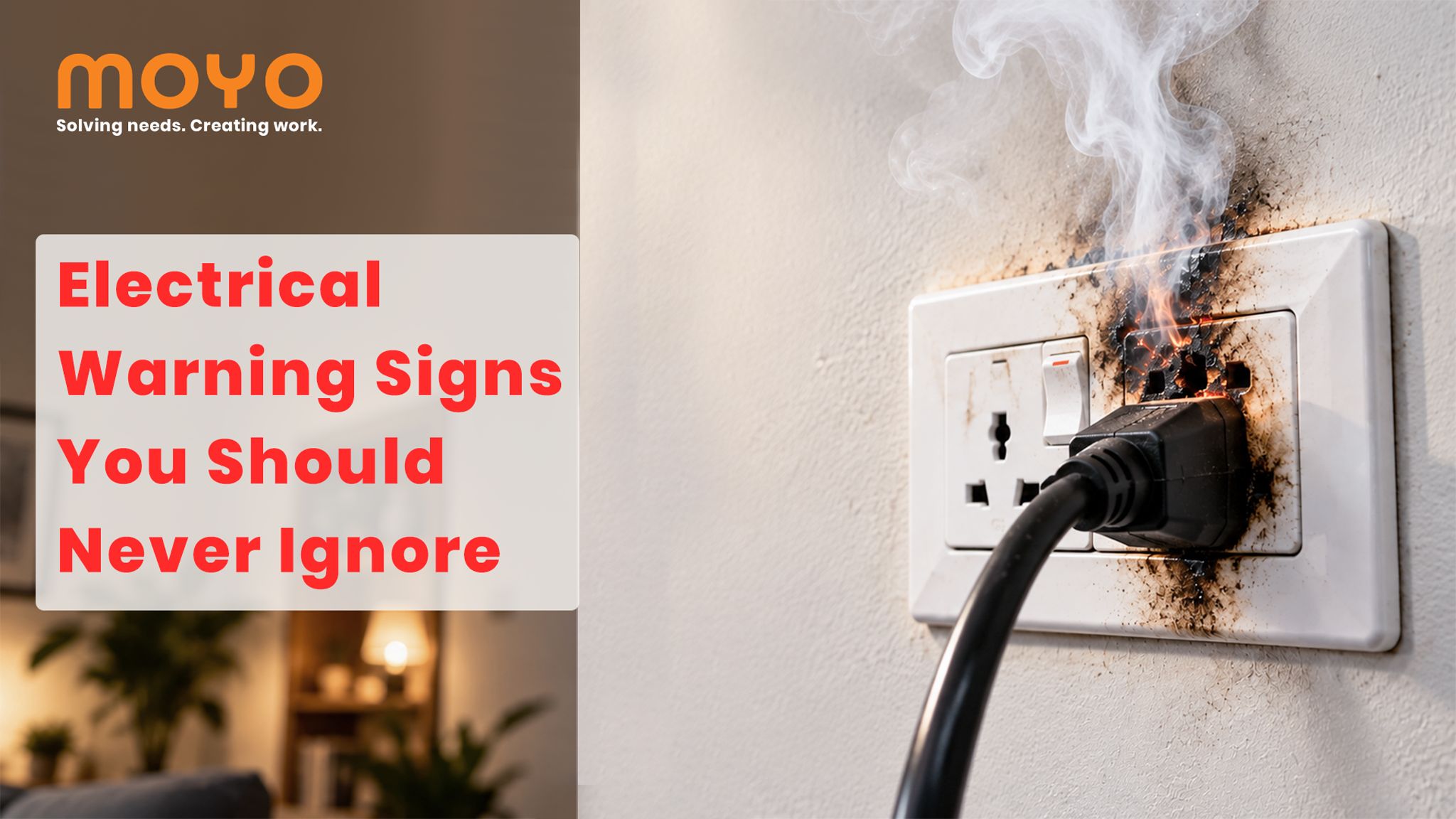
When you notice an unusual burning odor in your home, especially one that appears to come from switches, outlets, appliances, or your electrical panel, it is important not to ignore it. Some common symptoms include a smell of melted plastic or the presence of dark marks on an outlet.
What Might Cause This?
Some possible causes of burning odors or scorch marks could be:
Overheated or broken wiring
Loose electrical connections
An overloaded circuit
Broken switch or outlet
Broken electrical parts
The burning or blackened marks near the outlet are of particular concern as they suggest that overheating may have been going on for some time already.
What Should You Do?
Do not dismiss the smell just because it subsides after a few minutes. In case you are able to identify the source of the smell in your house, disconnect the circuit, if possible. Also, be careful about touching damaged or melted parts.
The most important thing to avoid doing is not covering up the burn marks and replacing the faulty outlet yourself in hopes of resolving the situation.
The smell of burning is a definite signal from your home and should not be ignored.
Buzzing, Humming, or Crackling Sound
Your electrical system should not produce weird sounds. Any buzzing, humming, popping, and crackling coming from a switch, an outlet, a light fixture, and the electrical panel are not normal and should not just be ignored by turning up the volume of your TV.
What Causes Weird Electrical Sounds?
Strange electrical sounds could be due to:
Wiring or connection problems
Switches or outlets that do not work properly
An overloaded circuit
Damaged electrical components
Arcing, which is electricity jumping between connections
It is normal for some electrical systems to produce a very faint hum. But if you notice a new, loud and persistent one, then there might be something wrong with your electrical system.
Why Should You Treat This Issue Seriously?
Popping or crackling sounds are an indication of electrical arcing that produces a lot of heat and might damage the materials around. Using the damaged outlet or switch will not help to solve the problem, but rather will only worsen it.
When hearing some strange sounds, never try to open the switchboard or fix any wires yourself. If possible, turn off the corresponding circuit and call an electrician to check everything.
This weird buzzing noise might seem negligible, but when electricity starts to make a noise, pay attention.
Sparking Outlets and Switches
A small spark upon plugging an appliance doesn’t necessarily mean that there is anything wrong. However, when the outlet or switch sparks often, there is a large spark or when smoke appears, there is a burning smell, or any other strange sounds, it is necessary to take care of this.
What May Cause This Problem?
Sparking may result from:
Loose or broken wiring
Defective outlets or switches
Damaged plugs of the appliance
Short circuits
Water around the electrical contacts
Sometimes a small and quick spark may appear when plugging some appliances. But sparking shouldn’t appear often and shouldn’t be big.
When Should You Be Worried?
Take special care if you see any signs of black spots, melting plastic, smoke, heat, or a burning odor emanating from the outlet or switch. These symptoms could be signs of overheating or arcing and could lead to the risk of fire or electric shock.
If an outlet is sparking, stop using it and unplug your appliance if it is safe to do so. Do not touch any live wires or open the outlet on your own. In case there is any smoke, fire, or other immediate danger involving electricity, get out of the area immediately and contact the relevant authorities.
Persistent sparking requires an examination by a licensed electrician of the outlet, its wiring, and the connected appliance.
A spark may last only a second, but the problem behind it shouldn’t be ignored.
Warm, Discoloured, or Shocking Switches and Outlets
Do you know how your outlet, circuit breaker, or switch gets very warm after some time or maybe you see discolored, brown, or black marks around them? Well, these may look like insignificant problems, but they may mean overheating, damage, or poor installation of some electrical parts.
Feeling a slight shock when touching your switch, an appliance, or even an outlet is not a normal occurrence either.
What Can This Mean?
These red flags could be due to:
Damaged or loose wiring
Overloaded circuits
Faulty or worn out switches or outlets
Poor connections
Appliance failure or grounding problems
Your device being somewhat warm can be okay for some electrical devices, but it is not for your switch or outlet.
What Should You Do?
In case you have experienced heat, discoloration or a shock from an electrical plug/socket, you should refrain from using that particular socket/outlet or switch. Refrain from touching any exposed wires and attempting any repair on your own. In case you can identify the circuit involved, switch it off and get it checked by an electrician.
Another point is not to hide any discoloration or melting of marks and continue using the outlet. Heat, discoloration, and shocks are signals – not regular wear and tear.
This step could help you prevent an electrical problem from becoming a serious electrical safety hazard.
Final Thoughts: Don’t Ignore Electrical Warning Signs
Problems related to electrical equipment do not present themselves abruptly with a big failure but rather come with small indicators. For instance, flickering of lights, tripped breakers, odd buzzing noises, and an electrical burning smell should be considered carefully.
Disregarding any type of warnings related to your electrical system may cause a relatively insignificant defect turning into a larger issue. Rather than continually resetting a faulty breaker, plugging things into a sparking outlet or not reacting to an odd smell, try to figure out what is the cause.
It is important to understand that there is no need for you to try diagnosing the issue by yourself because, when it comes to electrical systems, it is better not to risk and not to engage in amateurish work.
Thus, when anything odd occurs in your household, try not to use a problematic electrical connection or circuit and call in a professional electrician to inspect the situation.
Taking care of such warnings now will protect your home, appliances, and your family from possible problems with the electrical system in the future.
Frequently Asked Questions
Share this article